
Master Degree in International Trade & Business
Trade. Transform. Lead.
- Format In-person
- START
- LANGUAGE English
- ECTS 60
Full Time
Madrid
Download brochureMASTER IN INTERNATIONAL TRADE & BUSINESS
The MITB at ESIC University is an 100% English-taught programme for graduates who want to understand, manage and transform international trade. In a world redefined by geopolitical disruption, digital acceleration and sustainability mandates, the ability to operate across borders — combining market intelligence, trade finance, compliance, logistics and ESG strategy — has become a core executive competence.
The MITB is built for professionals who want to drive the full arc of international trade: from market selection and entry strategy to trade finance, supply chain optimisation, compliance and sustainable value chain management. Everything is real, applied and globally connected.
"From Brussels to Beijing: Live Global Governance First-Hand." Two fully paid international immersion weeks — Brussels & Strasbourg and China — are integrated into the programme and supported by Erasmus+ grants for every student.
INTERNATIONALLY ACCREDITED BY:
2026 INTAKE
Up to 30% study grant. Apply today!
Why ESIC?
At ESIC we know that doing is the best way of learning. Our programme design is based on pragmatic components like tools, workshops, real-world cases, and the deployment of licenses so that you can access the labour market with the best possible preparation. Our MITB approach stands out for its many advantages :
Erasmus+ for everyone — no extra cost
Both international weeks (Brussels + China) are fully included in the tuition fee. Erasmus+ mobility grants are available to all students, regardless of nationality, reinforcing ESIC's commitment to accessible internationalisation.
Dual academic-professional faculty
75% of the 16 MITB faculty members combine ANECA-accredited academic credentials — JCR publications, CNEAI sexenios, doctoral degrees — with senior executive careers in international trade, banking, logistics and consulting. Teachers who have lived the world they teach.
Business network of 200+ companies
ESIC's Professional Development Unit maintains active collaboration agreements with over 200 companies for internships and placement, with a minimum 2:1 ratio of internship places to MITB students.
Transformative Learning methodology
Every MITB module integrates real cases, live data, professional simulations and applied projects. Students work with UN Comtrade, WTO Statistics, Power BI, ICC trade finance instruments and OFAC sanctions screening tools throughout the programme.
Rankings
#1
SPAIN
Leaders in Marketing Master’s Programs according to El mundo

#3
SPAIN
ESIC on the podium of the Best Business Schools for recent graduates and young professionals

#34
EUROPE
ESIC among the European Top Schools for studying marketing programs

#49
WORLDWIDE
Best Marketing School based on the opinion of alumni, students, and employers

ESIC ACCREDITATIONS
More than 55 years of history means that we have institutional agreements and collaborations that recognise our quality as a business school. These are our accreditations:
ASSOCIATION OF MBAS
The international impartial authority
on postgraduate business education
EFMD Programme Accreditation
The leading international system of quality assessment,
improvement and accreditation of business programmes
Agencia Nacional de Evaluación de la Calidad y Acreditación
Sistemas de Garantía de Calidad de Centros y Docencia
ASSOCIATION OF MBAS
The international impartial authority
on postgraduate business education
EFMD Programme Accreditation
The leading international system of quality assessment,
improvement and accreditation of business programmes
Agencia Nacional de Evaluación de la Calidad y Acreditación
Sistemas de Garantía de Calidad de Centros y Docencia
Why should you study International Trade Business?
Global trade is being rewritten
The post-globalisation era is reshaping supply chains, trade routes and business models. CBAM, CSDDD, AI-driven customs, digital payments — understanding these forces is now a core executive competence, not a technical speciality.
The talent gap is real and growing
Employers across logistics, banking, consulting and manufacturing report a persistent shortage of professionals who combine analytical rigour, regulatory knowledge and commercial execution in international environments. The MITB was designed to close that gap.
Data is the new trade intelligence
From UN Comtrade and WTO Statistics to Power BI dashboards and AI-assisted tariff classification, data literacy is now essential for anyone managing international commercial operations. The MITB trains this competence from day one, with real tools and real datasets.
Sustainability is now operational
ESG and scope 3 emissions are embedded in contracts, trade finance, supplier selection and regulatory compliance. MITB students learn to navigate this reality — not just report on it.
Two worlds, one programme
Brussels and Beijing represent the two poles of today's global trade architecture. The MITB places you physically inside both ecosystems within the same academic year, with full Erasmus+ support and zero extra cost.
Career-ready from day one
The GLO LAB capstone project and mandatory internship ensure students graduate with documented professional deliverables and a network in the sector — not just a degree.
STUDENTS’ PROFILE: WHO IS THIS MASTER’S DEGREE FOR?
The MITB is designed for recent graduates who want to build a career in the international dimension of business. The programme welcomes students from diverse academic backgrounds and combines them in an English-speaking, multicultural learning environment.
MITB students share three things: curiosity about the world, analytical ambition and the drive to make things happen — not just to understand why they happen. They come from economics, business, law, engineering and international relations. What they have in common is more important than where they come from.
- Recent graduate with a bachelor's degree in any field.
- Official B2 English certificate or above (CEFR), accredited externally at the time of pre-registration.
- Analytical mindset and genuine interest in global markets, trade policy or international business.
- Motivation to work with real data, real cases and real companies from day one.
- International career ambition — commercial, financial, logistical or strategic roles.
Students whose background does not include economics or international business may be required to complete one or both supplementary pre-programme modules (CF-1: Fundamentals of International Trade, 3 ECTS; CF-2: Quantitative and Financial Foundations, 3 ECTS), delivered online in the two weeks prior to programme start. A placement test determines this on an individual basis.
Our students
Age
Gender
Country
International
Objectives Master Degree in International Trade & Business
The MITB trains professionals capable of analysing, deciding and acting in complex international environments — integrating quantitative and qualitative evidence, regulatory frameworks and sustainability criteria. Aligned with MECES Level 3, the programme ensures knowledge integration, judgement under uncertainty, specialised communication and learning autonomy.
Upon graduation, students will be able to:
Analyse international trade flows, competitive advantages and trade policy instruments to support strategic decisions.
Build trade intelligence dashboards from official databases, including UN Comtrade, WTO Statistics, Eurostat and OECD TiVA.
Prioritise international markets and design evidence-based market entry and go-to-market strategies.
Structure trade finance operations and design mitigation plans for counterparty, country and foreign exchange risks.
Manage the full import-export compliance cycle, including tariff classification, rules of origin, customs valuation, AEO programmes and counterparty screening.
Design and optimise multimodal logistics networks and implement paperless trade flows such as e-invoicing, eCMR and track & trace systems.
Integrate ESG criteria into trade and supply chain decisions, including scope 3 metrics and compliance with CBAM and CSDDD regulations.
Communicate with precision in English to technical and non-technical audiences through executive reports, policy briefs and board-level presentations.
Lead multicultural teams and conduct intercultural negotiations in complex institutional and cultural environments.
PROGRAMME STRUCTURE AND LEARNING METHODOLOGY
The MITB is structured around five thematic pillars plus three integrative modules. All 60 ECTS are taught 100% in English in full-time mode across two semesters.
TRASFORMATIVE LEARNING:
A student-centered model that enhances your personal and professional development through:
Every module integrates lectures with real-case analysis, PBL projects, professional simulations, live data labs and structured reflection. Students graduate with documented professional deliverables — not just academic credits.
- Global Trade Economics & Policy · 6 ECTS · Semester 1
Trade flows, elasticities, revealed comparative advantages, WTO governance, tariff and non-tariff barriers, CBAM and trade policy impact assessment. Live data exercises with UN Comtrade and WTO Statistics databases.
- Geopolitics of Business · 3 ECTS · Semester 1
Geopolitical risk mapping and its implications for market entry, sourcing and supply chain design. Scenarios, sanctions, export controls, US-China tech-trade rivalry, EU Supply Chain Act, reshoring and friend-shoring. Policy brief production and negotiation simulation.
- International Market Strategy · 6 ECTS · Semester 1
Market prioritisation using gravity models and Comtrade data. Modes of entry and evidence-based selection. Value proposition for foreign markets. Multichannel go-to-market design. Key account management. Commercial performance metrics. Applied market research with primary and secondary data.
- Cross-Cultural Management · 3 ECTS · Semester 1
Cultural analysis frameworks (Hofstede, GLOBE, Meyer). Communication and negotiation styles by region. Multicultural team leadership. Cultural intelligence applied to international project management. Intercultural conflict management in global B2B environments.
- International Trade Law & Compliance · 3 ECTS · Semester 1
Tariff classification (HS), customs valuation, preferential and non-preferential origin, Incoterms® 2020, civil and criminal liability, ICC arbitration, CISG. Counterparty screening, OFAC and EU sanctions. AEO programmes. CSDDD supply chain due diligence. Legal aspects of cross-border digital trade.
- International Trade Finance & Risk Management · 3 ECTS · Semester 1
Letters of credit (LC/SBLC), bank guarantees, documentary collections, forfaiting, supply chain finance, export factoring. Country risk analysis (COFACE, Euler Hermes, Moody's). Counterparty risk and rating. FX risk management (forward hedging, options). Impact on P&L and cash flow. Structuring in high-risk markets.
- Data Analytics for International Trade · 6 ECTS · Semester 2
Critical evaluation of quantitative and qualitative evidence applied to trade. Data integration and transformation (UN Comtrade, WTO Statistics, OECD TiVA, Power BI, introductory Python). Indicator construction: RCA, Herfindahl-Hirschman, elasticities. Executive dashboards and trade intelligence. Applied analysis projects: problem definition, methodology, evidence, validation, results communication. Data ethics, quality and traceability.
- Digital Transformation in Trade · 3 ECTS · Semester 2
Cross-border digital trade: platforms, marketplaces and D2C models. Paperless trade: e-invoicing, eCMR, track & trace, single digital window. Blockchain and supply chain traceability. AI and automation in trade operations (AI-assisted tariff classification, demand forecasting). WCO Data Model, GS1 standards. Cybersecurity in digital trade.
- Global Innovation Management · 3 ECTS · Semester 2
Innovation in global value chains: reshoring, nearshoring and distributed manufacturing (OECD TiVA, World Bank GVC data). Open innovation and cross-border technology transfer. IP management across jurisdictions. Green innovation and trade policy: CBAM, Net-Zero Industry Act, IRA. Innovation ecosystems in emerging markets (China, India, Brazil). Strategic analysis of global leaders (Inditex, LVMH, BYD, Amazon Global Selling).
- Communication, Ethics & Sustainability in Global Trade · 6 ECTS · Semester 2
Executive communication in English: policy briefs, board-level reports, presentations to investors and regulators. ESG frameworks (GRI, ISSB/IFRS S1-S2, CSRD). Scope 3 metrics, supplier scorecards, materiality. CSDDD and impact reporting. SDGs and trade: corporate alignment strategies. Ethics in international business: anti-corruption, integrity and corporate governance. Stakeholder management across jurisdictions.
- International Internship (Prácticas Académicas Externas) · 6 ECTS · Annual
Mandatory internship with a company from ESIC's professional network in export, logistics, trade finance, international marketing or compliance roles. Academic and professional tutoring. Three formal supervision sessions, initial work plan and final report with evidence of transferred learning. Erasmus+ grants available for international placements.
- International Experience · 6 ECTS · Semester 2
Structured international immersion at a partner university (Erasmus+ network, 70+ institutions in 35 countries) or international company. Erasmus+ grants available for all students. Reflective report documenting learning and intercultural competence development.
- GLO LAB — Global Trade Project (TFM) · 6 ECTS · Semester 2
Professional capstone project — not an academic research thesis. Each student designs a real internationalisation strategy or solves a real trade challenge for a company or institution. Deliverables: executive report (max. 60 pages) + methodological annex + 20-minute oral defence in English before a three-member panel (academic tutor + MITB faculty + sector professional). Individual format. Trade. Transform. Lead.
*Academic structure subject to change. Some business reality and networking sessions may be delivered via webinars outside of class hours.
Master's Degree in Continuing Education from ESIC University
Upon successful completion of the programme, you will be awarded the Master’s Degree in Continuous Education in International Trade & Business, issued by ESIC University*.
Find out more about what obtaining a degree from ESIC University entails.


CURRICULAR ACTIVITIES
The MITB is built around the principle that the best learning happens when theory meets real complexity. Every module integrates applied activities with professional-grade tools and real data.
- Market Intelligence Lab — Live exercises with UN Comtrade, WTO Statistics and OECD TiVA. Students build RCA indices and trade intelligence dashboards in Power BI.
- Trade Finance Simulation — Real bank instrument structuring. Students select instruments, estimate cost-risk-return profiles and present to a simulated risk committee.
- Compliance Audit — Real-case tariff classification, origin determination and counterparty screening using OFAC and EU sanctions databases. AEO compliance audit simulation.
- Geopolitical Risk Workshop — Scenario analysis and policy brief production on live trade conflicts and sanctions regimes.
- Intercultural Negotiation — Live simulations across cultural contexts (China, Middle East, Latin America, Northern Europe) with structured feedback.
- ESG & Scope 3 Audit — Students design a supplier scorecard and scope 3 measurement framework for a real company, applying GRI and ISSB/IFRS S1-S2 standards.
- Market entry strategy for a Spanish SME entering Southeast Asia — full arc from intelligence to go-to-market.
- Trade finance operation structuring for a high-risk market transaction.
- Digital trade transformation roadmap for a logistics operator — e-invoicing, eCMR, blockchain traceability.
- GLO LAB preparatory case — internationalisation strategy with real company data, Comtrade intelligence and ESG dimension.
TOOLS YOU WILL LEARN
- Data & analytics: UN Comtrade · WTO Statistics · Eurostat · OECD TiVA · Power BI · Python (introductory).
- Trade finance: ICC model contracts · SWIFT documentation · COFACE country risk platform.
- Compliance: HS tariff classification tools · EU/OFAC sanctions screening · AEO self-assessment frameworks.
- Digital trade: e-invoicing platforms · eCMR systems · blockchain traceability demos · AI-assisted customs tools.
- Communication: executive presentation coaching · policy brief writing in English · Bloomberg data access.
FACULTY AND GUEST SPEAKERS
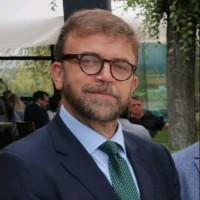



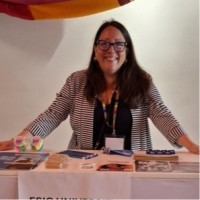


*Faculty and guest speakers are subject to change.
Employability
Boost your career with the support of ESIC’s Professional Development Unit (PDU)
The PDU supports you at every stage of your journey—both as a student and later as part of our Alumni community. The Employability area manages nearly 4,000 internship offers and over 2,000 job opportunities each year, with a global employability rate of 95%. It offers access to an exclusive job portal, international job platforms, and organises recruitment activities, career fairs, and employability training.
👉 Remember: your professional success will also depend on your initiative in identifying opportunities and your engagement throughout the process.
Learn more about ESIC’s Employability, Entrepreneurship Services and Alumni here.
97%
of our students are employed within the first year after completing the programme
+2.000
students receive career guidance each year from our Professional Development Unit
+3.200
partner companies collaborate annually in talent recruitment
+4.000
internship opportunities are managed annually by the Unit across our campuses
+1.800
job opportunities are available each year through our employability porta
CAREER OPPORTUNITIES
- International Trade & Export Manager
- Trade Finance Specialist
- Global Supply Chain & Logistics Manager
- Trade Compliance Officer
- Market Intelligence & Trade Analytics Analyst
- International Business Development Manager
- ESG & Sustainability Manager — International Trade
- International Trade & Digitalisation Consultant
WHERE DO OUR STUDENTS WORK?






International Experience
📅 Duration: 1 week · 25 academic hours · 3 ECTS
The MITB integrates two full international immersion weeks directly into the curriculum — both included in the tuition fee and supported by Erasmus+ mobility grants for all students. No extra cost. No exceptions. This is ESIC's commitment to accessible and genuine internationalisation.

EU Experience — Brussels & Strasbourg
Objective: Place students at the heart of European trade governance and regulatory decision-making.
Content:
- Academic visits to the European Parliament, Commission and Council.
- Seminars with experts in trade diplomacy, EU trade policy and economic integration.
- Workshops with think-tanks and European business representatives.
- Multilateral negotiation simulation and institutional networking.
Learning outcomes: Understand EU governance mechanisms and their impact on global trade · Analyse EU trade policy and its influence on international markets. Develop multilateral negotiation and diplomatic communication competences.
What’s included?
- On-campus classes with professors and industry experts
- Case studies on global economics, AI, and financial policy
- Visits to international financial institutions
What’s not included?
- Accommodation
- Flights
- Meals
Questions? Contact us: oficina.internacional@esic.edu

Asia Experience — China Immersion Week
Objective: Experience the economic and geopolitical dynamics of Asia first-hand.
Location: Beijing, Shanghai or Chengdu (confirmed annually).
Content:
- Seminars at partner universities and innovation hubs.
- Workshops on geoeconomics, digital trade and business diplomacy.
- Meetings with companies and European-Chinese chambers of commerce.
- Cultural immersion and strategic networking.
Learning outcomes: Analyse China's role in the global economy and trade architecture. Evaluate opportunities and risks for European and Latin American businesses in Asia. Develop intercultural intelligence and global strategic thinking.
What’s included?
- Face-to-face classes with ESG and sustainability experts
- Case studies on governance and sustainability
- Strategies for internal and external ESG communication
- Visits to leading companies in the sector
What’s not included?
- Accommodation
- Flights
- Meals
Questions? Contact us: oficina.internacional@esic.edu
Extension programme
📅 Duration: 3 to 12 months (minimum 12 credits)
Broaden your academic and professional horizons with the Extension Programme — a unique opportunity for international specialisation.
Designed to complement your studies, this programme allows you to choose subjects and courses from an exclusive portfolio of over 60 partner universities across Europe, Asia, and the Americas.
You’ll be able to customise your learning experience with courses aligned to your career goals and gain key knowledge for your professional future. Upon completion, you'll receive an official certificate listing your subjects and accredited credits, validating your global experience — with no academic cost, as ESIC covers it through bilateral agreements.
Take your education to the next level and stand out in a world without borders!
What’s included?
- On-campus university classes
- Assessment and academic monitoring
- Certificate of completion, transcript, and credit accreditation
What’s not included?
- Flights
- Accommodation
- Meals
Questions? Get in touch with us: oficina.internacional@esic.edu
If you want to see all the universities with detailed information, here it is.
DOWNLOAD EXTENSION PROGRAMMECAMPUS, PRICES AND FORMATS
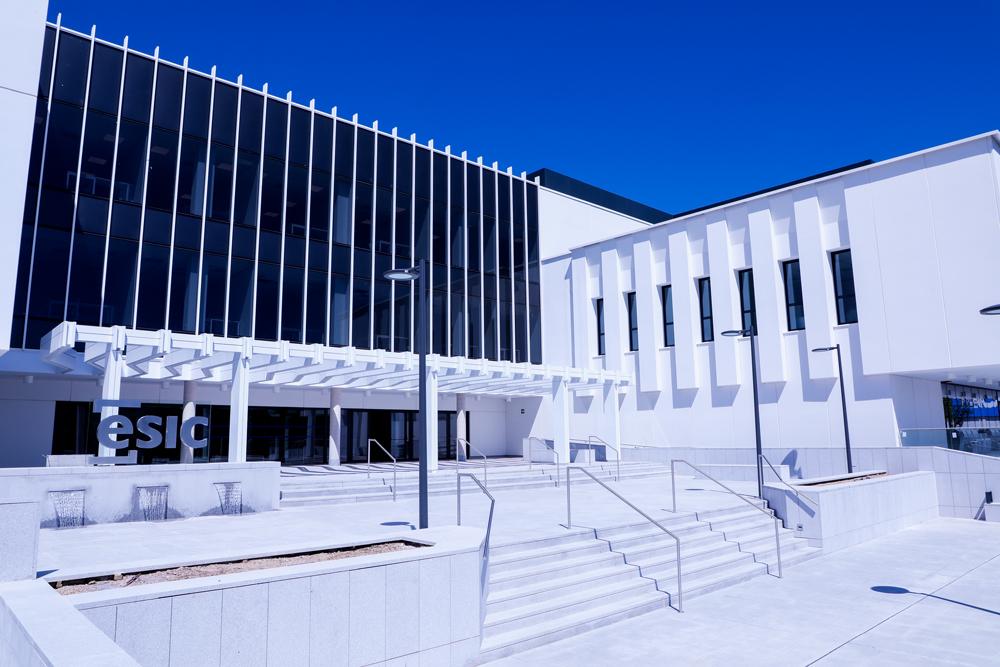
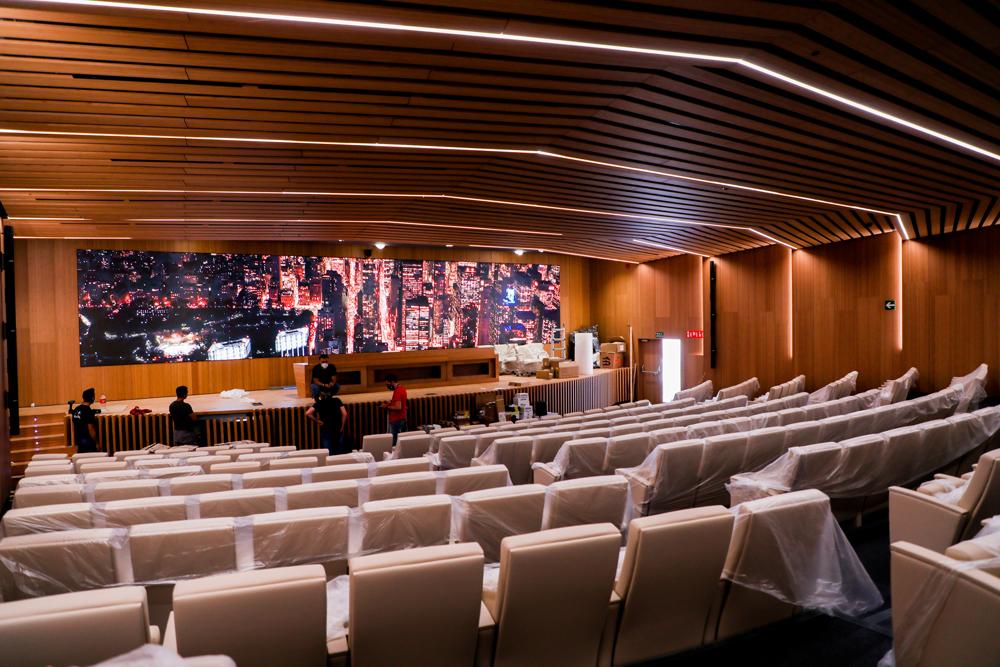
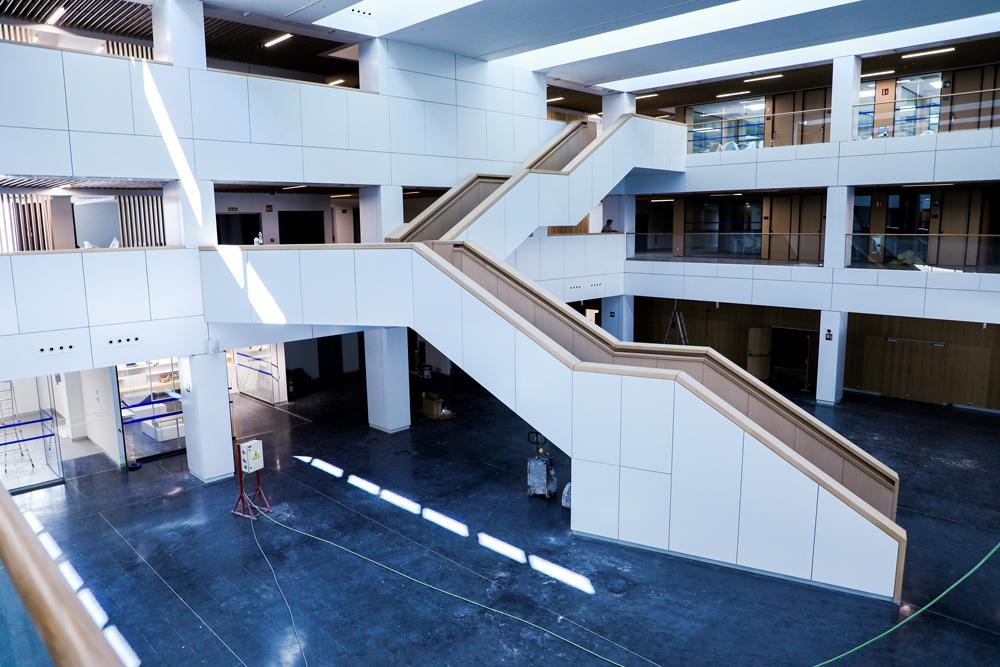
Our Master’s Degree in International Trade & Business in Madrid is taught at ESIC Business & Marketing School campus. Our campus in Madrid was inaugurated in 2021 and has 40 classrooms, an auditorium for 300 people, 16 work rooms, 5 meeting points, a gym, a mindfulness room, a cafeteria, and much more. Our classrooms are full of students from our master's and postgraduate programmes specialising in marketing, management, and technology. The campus is the place to network, work on your ideas, and learn. But, above all, it is the perfect place to live in the present and build the future.
Campus in Madrid
Avenida Juan XXIII 12,
Pozuelo de Alarcón, Madrid
Phone +34 91 452 41 00
View on Google MapsIntakes and prices
Duration: October 2026 – July 2027
Tuition Fee:
€ 18.000
Format: Full Time
Schedule: Monday to Thursday, 18:00 – 22:00
ADMISSION PROCESS
We accompany you throughout the whole process, guiding and advising you so that you choose the best option for your professional career. These are the steps to follow:
1 Application
- You request information through our form.
- An advisor will contact you in the following 24–48 hours.
- You have a first contact call, and a consultancy meeting is convened for questions and doubts.
- You have a second call where all your doubts are solved, and you are guided in everything you need.
2 Documentation
- If the programme meets your needs, you proceed to apply.
- Prepare the necessary documentation (such as university degree or certificates).
- Conduct a personal and professional essay.
- You hand in all documentation.
3 Interview
- Once the documentation is approved, you are scheduled for an interview with the programme director.
- At this interview, you will be able to discuss any specifics you want to know about the programme, as well as any questions you may have.
4 Enrolment
- After the interview, your advisor will contact you within 24–48 hours to notify you if you have been accepted into the programme.
- Once you have been accepted, you have about 5 days to formalise your enrolment.
- Once the enrolment is complete, you will be given all your access (virtual classroom, e-mail…).
- Of course, our last step is always to congratulate you and to wish you the best in your studies.
SCHOLARSHIPS AND STUDY GRANTS
We currently offer a range of scholarships and financing agreements to help support your future.
We do not want economic issues to be an obstacle for you to reach your objectives and ensure training with a future. Therefore, we present you with a wide range of possibilities that will help you in this sense, both the Scholarship Plan that we have developed at ESIC, as well as those that are available to you from different public and private organisations. The scholarships and grants available are as follows:
- Early enrolment grants
- Diversity grants
- Expiga grants
- Women and Leadership grant
ESIC has financing agreements with certain banks with preferential conditions for students enrolled in any of its programmes, as long as you have a bank account in Spain. The specific rules and conditions of each of these agreements can be found in the Secretary's Office. ESIC helps you with the financing of your degree.
If you live outside one of the cities where ESIC has a campus and you are looking for accommodation, we recommend a series of companies and residences dedicated to student accommodation. Find the one that best suits your needs.
MORE INFORMATION
ESIC has partnered with Flywire to accept payments from international students worldwide. You can make your payment easily and securely in your own currency, using local payment methods from the safety and comfort of your home. Real-time tracking and multilingual support are available around the clock.
LEARN MORE ABOUT FLYWARE





FREQUENTLY ASKED QUESTIONS
Yes. The MITB is a verified Official University Master's Degree under the Spanish university system, fully recognised across the European Higher Education Area (EHEA) at MECES Level 3. Verification is conducted by Madri+d on behalf of ANECA and the Spanish Ministry of Education.
A minimum B2 level (CEFR) is required, certified by an official external certificate recognised under CRUE/ACLES criteria. No internal university tests are accepted. Candidates without a valid external certificate cannot be admitted.
The MITB welcomes students from any bachelor's background. Depending on your academic profile, you may be required to complete one or both supplementary modules (CF-1 and CF-2, 3 ECTS each) in the two weeks prior to programme start. A placement test determines this individually.
Yes. Both international weeks (Brussels/Strasbourg and China) are fully integrated into the curriculum and included in the tuition fee. Erasmus+ mobility grants are available to all students, further reducing travel and accommodation costs.
The International Internship (6 ECTS) is a mandatory component of the MITB. It can be completed in Spain or internationally. Erasmus+ grants are available for international placements. Managed by ESIC's Professional Development Unit in coordination with the MITB Academic Director.
The GLO LAB is the MITB's professional capstone project — not an academic research thesis. Students design and execute a real internationalisation strategy or trade challenge for a real company, and defend it before a three-member panel. The deliverable is an executive report, not a monograph.
No. The MITB is offered exclusively in full-time mode. There is no part-time option. This ensures the depth of learning and the quality of the international experience for all students.
MITB graduates are prepared for roles in international trade management, trade finance, logistics and supply chain, trade compliance, market intelligence, ESG in global trade, and international business development — in multinational corporations, banks, logistics operators, consulting firms, chambers of commerce and international institutions.