
Master in International Relations and Global Economy
Master's Degree in International Relations and Global Economy
- Format In-person
- START * scholarships available for this call
- LANGUAGE English
- MODALITY Full Time
Master's Degree in International Relations and Global Economy
Understand the World. Shape What Comes Next.
The MIRGE at ESIC University is an official, 100% English-taught programme for graduates who want to understand and act in the macro international environment — where geopolitics, institutional power, economic diplomacy and global governance intersect to shape the decisions that move countries, industries and markets.
The world needs professionals who can read beyond the headlines: who understand why trade agreements collapse and why they are signed, how international institutions exercise power and where that power is contested, how geopolitical shifts translate into country risk and business strategy, and how organisations — corporations, governments, NGOs and multilateral bodies — navigate a world in structural transition.
The MIRGE trains exactly those professionals. It is not a programme about managing international operations — that is the MITB. The MIRGE is about understanding the global forces that define the rules of the game, and advising, analysing and leading at that level.
"From Brussels to Beijing: Live Global Governance First-Hand." Two fully paid international immersion weeks — inside the EU institutions in Brussels and Strasbourg, and at the centre of Asian economic power in China — are integrated into the programme and supported by Erasmus+ grants for every student.
Elevate your career with a Master’s degree starting in October 2026.
Discover our available funding opportunities and secure your place today.
Why ESIC?
At ESIC we know that doing is the best way of learning. Our programme design is based on pragmatic components like tools, workshops, real-world cases, and the deployment of licenses so that you can access the labour market with the best possible preparation. Our Master's Degree in International Relations and Global Economy approach stands out for its many advantages:
Official university degree with European recognition
The MIRGE is a verified official master's degree under the Spanish university system (ANECA / Madri+d), carrying full academic recognition across the European Higher Education Area (EHEA) at MECES Level 3.
Faculty with genuine institutional and diplomatic experience
MIRGE faculty combines academic rigour in political science, international economics and law with direct professional experience in international organisations, diplomatic advisory roles, think tanks and multinational corporations operating at the institutional level. This is not a programme taught from textbooks.
Madrid: a strategic location for international careers
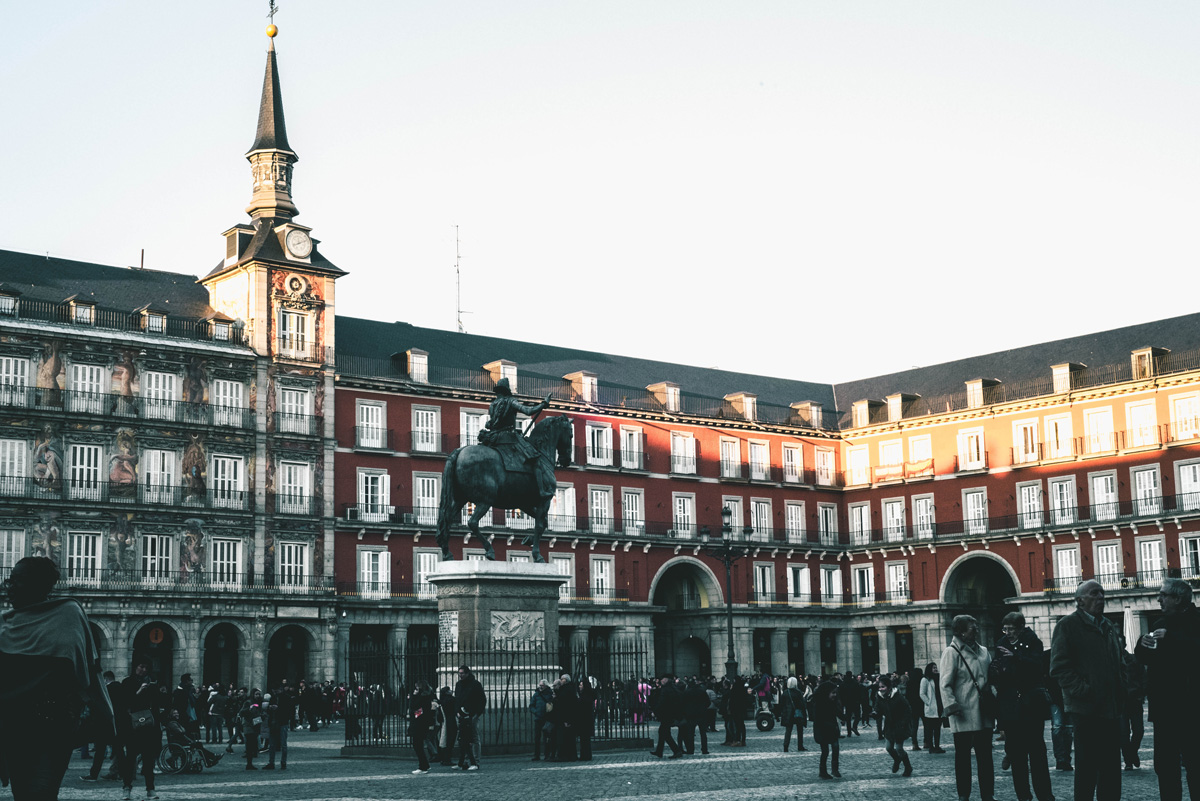
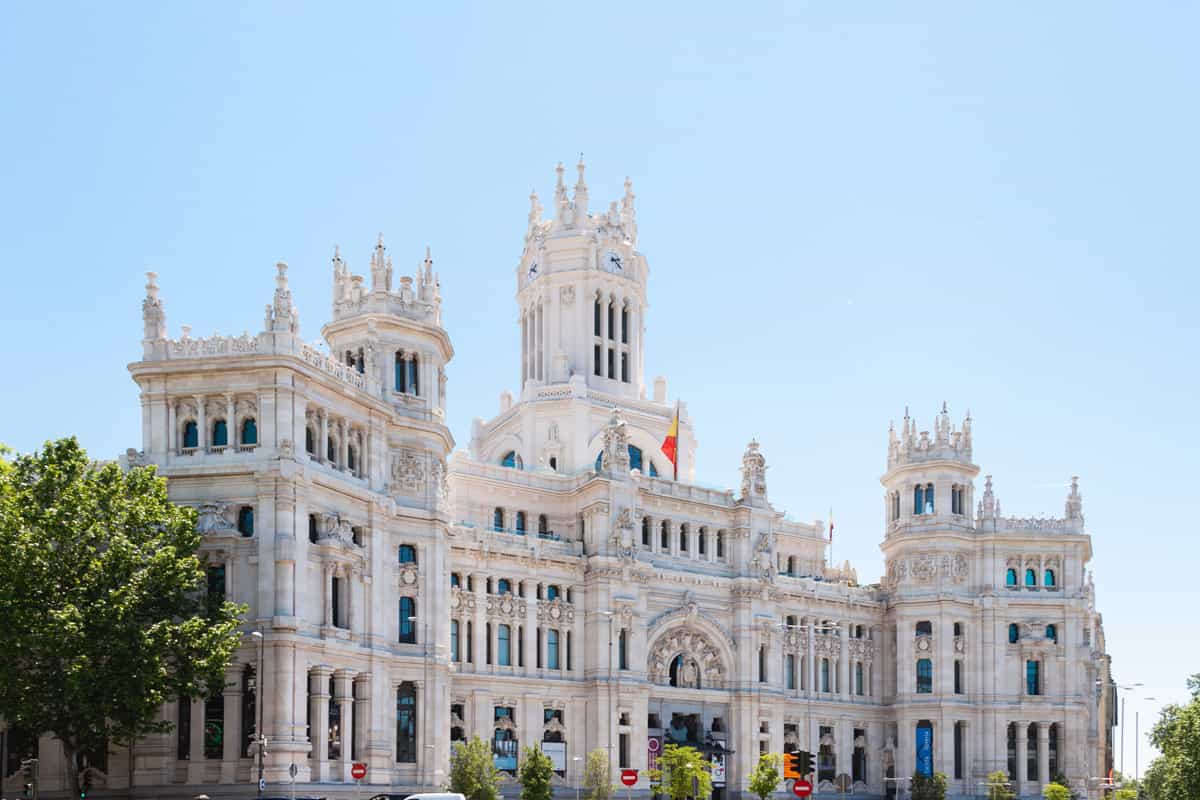
Madrid is home to the headquarters of major international organisations (WTO Liaison Office, ICEX, Cervantes Institute, Casa Árabe, Casa de América), diplomatic missions from 180 countries, multinational corporations with global management functions, and one of the most active diplomatic communities in Europe. The MIRGE puts you inside this ecosystem.
Erasmus+ for everyone — no extra cost
Both international weeks (Brussels/Strasbourg + China) are fully included in the tuition fee. Erasmus+ mobility grants are available to all students, regardless of nationality, reinforcing ESIC's commitment to accessible and genuine internationalisation.
Transformative Learning methodology
Every MIRGE module integrates theoretical frameworks with policy simulation, scenario analysis, intelligence briefings and institutional role-play. Students produce professional-grade deliverables — country risk reports, policy briefs, diplomatic position papers and institutional strategy documents — throughout the programme.
Rankings
#1
SPAIN
Leaders in Marketing Master’s Programs according to El mundo

#3
SPAIN
ESIC on the podium of the Best Business Schools for recent graduates and young professionals

#34
EUROPE
ESIC among the European Top Schools for studying marketing programs

#49
WORLDWIDE
Best Marketing School based on the opinion of alumni, students, and employers

ESIC ACCREDITATIONS
More than 55 years of history means that we have institutional agreements and collaborations that recognise our quality as a business school. These are our accreditations:
ASSOCIATION OF MBAS
The international impartial authority
on postgraduate business education
EFMD Programme Accreditation
The leading international system of quality assessment,
improvement and accreditation of business programmes
National Agency for Quality Assessment and Accreditation
Quality Assurance Systems for Institutions and Teaching
ASSOCIATION OF MBAS
The international impartial authority
on postgraduate business education
EFMD Programme Accreditation
The leading international system of quality assessment,
improvement and accreditation of business programmes
National Agency for Quality Assessment and Accreditation
Quality Assurance Systems for Institutions and Teaching
Why should you study International Relations and Global Economy?
The global order is being redesigned
US-China rivalry, the re-weaponisation of trade policy, the fragmentation of multilateralism, the rise of regional powers, the geopolitics of technology — the international system is undergoing its most significant structural shift in decades. Professionals who can analyse, anticipate and advise on these dynamics are in high demand across the public, private and third sectors.
International institutions shape every business decision
The WTO, IMF, World Bank, European Commission, UN and G20 are not abstract entities — they set the rules under which companies trade, invest, compete and operate globally. Understanding how they work, how they are contested and how to engage with them is a professional competence that was once reserved for diplomats. Today, it is essential for consultants, analysts, executives and policy advisers.
Country risk is now a boardroom topic
Geopolitical risk has moved from the risk department to the C-suite. Companies need professionals who can build rigorous country risk frameworks, assess political instability, anticipate regulatory shifts and translate geopolitical scenarios into business-relevant intelligence. The MIRGE trains this analytical depth.
Economic diplomacy is a growth profession
Corporate diplomacy, public affairs, institutional relations, government engagement — organisations of every type need professionals who can navigate the interface between business and political power, in multiple languages, across cultures and jurisdictions. The MIRGE is the only official programme in Spain designed specifically to develop this profile.
Two worlds, one programme
Brussels and Beijing represent the two poles of the current global governance debate — the institutional rules-based order and the power-based challenger. The MIRGE places you inside both within the same academic year, with full Erasmus+ support and zero extra cost.
A network that opens doors that most programmes cannot
The MIRGE connects students with ESIC's network of 150+ international partner universities, international organisations, think tanks, diplomatic missions in Madrid and senior professionals from the world of economic diplomacy, multilateral institutions and strategic consulting.
STUDENTS’ PROFILE: WHO IS THIS MASTER’S DEGREE FOR?
The MIRGE is designed for graduates who want to understand and act at the macro international level — in institutions, organisations, consulting firms or corporations that operate at the intersection of politics, economics and global strategy.
MIRGE students are intellectually curious, analytically ambitious and globally oriented. They are not satisfied with knowing what happened — they want to understand why, what it means and what comes next. They come from political science, international relations, economics, law, history and business. They share a common conviction: that understanding the world is the first step to changing it.
- Recent graduate with a bachelor's degree in any field.
- Official B2 English certificate or above (CEFR), accredited externally at the time of pre-registration.
- Genuine interest in international politics, global economics, institutional governance or economic diplomacy.
- Analytical and critical thinking orientation — comfortable with complexity, ambiguity and multi-stakeholder scenarios.
- International career ambition — think tanks, international organisations, strategic consulting, corporate diplomacy, country risk analysis or public affairs.
Students whose background does not include economics or international business may be required to complete one or both supplementary pre-programme modules (CF-1: Fundamentals of International Trade and Entry Strategies, 3 ECTS; CF-2: Quantitative and Financial Foundations, 3 ECTS), delivered online in the two weeks prior to programme start. A placement test determines this individually.
Objectives Master in International Relations and Global Economy
The MIRGE trains professionals capable of analysing the macro international environment, advising on geopolitical and institutional strategy, and acting effectively at the intersection of economics, politics and global governance. Aligned with MECES Level 3, the programme ensures knowledge integration, rigorous analytical judgement, specialised communication in English and learning autonomy.
Upon graduation, students will be able to:
Analyse the structure and dynamics of the international system, including power distribution, institutions, conflicts, alliances and global governance regimes.
Assess geopolitical risks, develop country risk frameworks and translate political scenarios into business-relevant intelligence.
Understand how international institutions (WTO, IMF, World Bank, UN, EU) function, how they are contested and how to engage with them strategically.
Analyse global macroeconomic dynamics, including trade and investment flows, monetary policy, financial architecture and economic interdependence.
Understand the regulatory and legal architecture of international economic relations, including international law, trade law, investment law and dispute resolution mechanisms.
Design and execute economic diplomacy strategies covering multilateral negotiation, public affairs, corporate diplomacy and government engagement.
Integrate sustainability, ESG principles and climate policy into global governance and institutional strategy frameworks.
Communicate with precision and authority in English through intelligence briefs, policy papers, position documents and executive presentations for institutional audiences.
Lead cross-cultural and multinational teams in environments of high institutional and political complexity.
Design and execute applied research projects on international relations and the global economy with academic rigour and capacity for institutional transfer.
PROGRAMME STRUCTURE AND LEARNING METHODOLOGY
The MIRGE is structured around five thematic pillars plus three integrative modules. All 60 ECTS are taught 100% in English in full-time mode across two semesters.
TRANSFORMATIVE LEARNING:
Every module integrates theoretical frameworks with policy simulation exercises, intelligence analysis, role-play of institutional negotiations and production of professional deliverables. Students graduate with a documented portfolio of analytical and strategic work — country risk reports, policy briefs, position papers and a capstone project — that demonstrates their readiness for roles in international organisations, consulting and corporate strategy.
- Global Political Economy · 6 ECTS · Semester 1
The foundations of the international economic order: theories of international political economy (liberalism, realism, constructivism, critical approaches), the architecture of global trade and finance, the distribution of economic power, hegemony and multipolarity, the political economy of development and underdevelopment. Case analysis of structural shifts: the rise of China, US unilateralism, the fragmentation of the WTO and the return of industrial policy.
- International Institutions & Global Governance · 6 ECTS · Semester 1
How the key institutions of the international order function, are contested and evolve: the United Nations system, WTO, IMF, World Bank, G7/G20, OECD. EU governance in depth: institutions, legislative process, external relations and trade policy. Regional organisations: ASEAN, African Union, MERCOSUR, APEC. Institutional reform agendas and the legitimacy crisis of multilateralism. How to engage, influence and negotiate within and around these institutions.
- Geostrategy & Country Risk Analysis · 6 ECTS · Semester 1
Geopolitical risk frameworks: political stability, regulatory risk, sanctions and export controls, social and security risk, climate vulnerability. US-China strategic competition and its implications for technology, trade and supply chains. Regional geopolitics: Europe, Middle East, Southeast Asia, Africa, Latin America. Scenario building and risk communication. Intelligence briefing methodology: structured analytical techniques, key judgements, assumptions and confidence levels.
- International Law & Regulatory Architecture · 3 ECTS · Semester 1
The legal architecture of international economic relations: sources of international law, treaty law, customary international law. Investment law and investor-state dispute settlement (ICSID, UNCITRAL). International trade law: GATT/WTO disciplines, safeguards, anti-dumping, subsidies. Human rights and business: the UN Guiding Principles, CSDDD and the emerging legal framework for corporate accountability in global operations.
- Global Macroeconomics & International Finance · 6 ECTS · Semester 2
The global macroeconomic landscape: trade and investment flows, current account dynamics, exchange rate regimes and currency wars. International financial architecture: the IMF, World Bank and development finance institutions; sovereign debt crises and restructuring. Monetary policy spillovers, capital flows and financial stability. Quantitative tools for macroeconomic analysis: trade data (UN Comtrade, WTO Statistics, IMF WEO), country indicators and forecasting models. Applied country economic assessment.
- Digital Global Economy & Technology Policy · 3 ECTS · Semester 2
The geopolitics of technology: US-China tech rivalry, semiconductor supply chains, 5G, AI governance and digital sovereignty. Digital trade and the emerging regulatory landscape: WTO e-commerce negotiations, EU Digital Services Act, cross-border data flows and data localisation. Platform economics and competition in global digital markets. The role of standard-setting bodies (ITU, ISO, W3C) in shaping the rules of the digital economy.
- Economic Diplomacy & Multilateral Negotiation · 6 ECTS · Semester 2
The theory and practice of economic diplomacy: bilateral and multilateral trade negotiations, investment promotion, development aid and financial diplomacy. Diplomatic protocol and communication. Multilateral negotiation techniques: coalition building, bridging proposals, veto players and ratification constraints. Case studies: WTO Doha Round, CETA, EU-China CAI, the Paris Agreement, G20 coordination. Simulation of a multilateral negotiation with institutional role-play.
- Corporate Diplomacy & Public Affairs Strategy · 3 ECTS · Semester 2
The interface between business and political power at the international level. Corporate diplomacy: how companies engage with governments, international organisations and civil society. Public affairs strategy: lobbying, advocacy and regulatory engagement in Brussels, Washington and Beijing. Stakeholder mapping and management in multi-jurisdictional environments. Crisis communication and reputational risk in geopolitically sensitive sectors. Government relations for multinational corporations.
- Sustainability, Climate Policy & Global Governance · 6 ECTS · Semester 2
The international governance of sustainability: the Paris Agreement, COP process, IPCC and the science-policy interface. EU Green Deal and its trade implications: CBAM, CSDDD, Net-Zero Industry Act, deforestation regulation. ESG frameworks in an institutional context: GRI, ISSB/IFRS S1-S2, TCFD, TNFD. Financing the green transition: green bonds, sustainable finance taxonomy, multilateral development bank instruments. Sustainable development goals (SDGs) and the 2030 Agenda: accountability, measurement and corporate alignment strategies.
- International Internship (Prácticas Académicas Externas) · 6 ECTS · Annual
Mandatory internship in an institution, company or organisation with activities at the international relations, public affairs, economic analysis or institutional strategy level. Target placements include international organisations, think tanks, corporate public affairs departments, export credit agencies, chambers of commerce, government ministries and international consulting firms. Academic and professional tutoring. Three formal supervision sessions, initial work plan and final report with evidence of transferred learning. Erasmus+ grants available for international placements.
- International Experience · 6 ECTS · Semester 2
Structured international immersion at a partner university (Erasmus+ network, 70+ institutions in 35 countries) or international organisation. Erasmus+ grants available for all students. Reflective report documenting learning, intercultural competence development and professional insight gained.
- Global Policy Lab — Trabajo Fin de Máster (TFM) · 6 ECTS · Semester 2
The MIRGE's capstone project — an applied policy analysis or institutional strategy project, not a traditional academic thesis. Students choose a real geopolitical, institutional or global economic challenge and produce a professional-grade analytical document: a country risk assessment, a policy brief for an international institution, a corporate diplomacy strategy or a multilateral negotiation analysis. Deliverables: analytical report (max. 60 pages) + executive summary + 20-minute oral defence in English before a three-member panel (academic tutor + MIRGE faculty + external expert from international organisations, think tanks or the diplomatic community). Individual format.
*Academic structure subject to change. Some business reality and networking sessions may be delivered via webinars outside of class hours.
Master's Degree in Continuous Education from ESIC University
Upon successful completion of the programme, you will be awarded the Master’s Degree in Continuous Education in International Relations and Global Economy, issued by ESIC University*.
Find out more about what obtaining a degree from ESIC University entails.

CURRICULAR ACTIVITIES
The MIRGE is built on the conviction that analytical capability only becomes professional competence when tested against real complexity. Every module integrates structured analytical exercises, professional simulations and the production of deliverables that would be at home in a real institutional setting.
- Country Risk Intelligence Briefing — Students produce a structured country risk assessment using the analytical techniques of professional intelligence organisations (political risk, regulatory risk, security risk, economic vulnerability). Peer review and expert feedback.
- Multilateral Negotiation Simulation — Full simulation of a WTO or G20 negotiation, with students assigned to delegations representing different countries. Structured debrief on negotiation strategy, coalition management and compromise-building.
- Policy Brief Workshop — Production of an executive policy brief for a fictional but realistic institutional audience (European Commission, IMF, national government ministry). Structured feedback on analytical rigour, clarity and communication.
- Corporate Diplomacy Role-Play — Simulation of a public affairs engagement between a multinational corporation and the European Commission on a regulatory proposal. Students develop strategy, prepare position papers and conduct the meeting.
- Geopolitical Scenario Analysis — Structured scenario exercise on a live geopolitical situation. Students apply scenario planning methodologies (PESTLE, futures wheel, key drivers) to produce a decision-relevant intelligence product.
- ESG & Sustainability Policy Lab — Students design a corporate sustainability strategy aligned with the EU Green Deal, CBAM and CSDDD, and present it to a simulated board and institutional audience
- Country risk assessment for a company considering a major investment in a frontier market — full political, economic, regulatory and security analysis.
- EU trade policy impact analysis — how a new EU regulation (e.g., CBAM, deforestation regulation) affects a specific industry and what the affected stakeholders should do.
- Multilateral negotiation case — reconstruction and analysis of a real international negotiation (e.g., WTO TFA, Paris Agreement, CETA) with lessons for practice.
- Corporate diplomacy case — how a multinational corporation managed a geopolitically sensitive situation (expropriation, sanctions, regulatory ban) at the institutional level.
TOOLS YOU WILL LEARN
- Data & analysis: UN Comtrade · WTO Statistics · IMF World Economic Outlook · World Bank Open Data · OECD.Stat · SIPRI databases.
- Country risk: COFACE Country Risk · EIU Country Risk · Oxford Analytica frameworks · PRS Group methodology.
- Institutional research: EUR-Lex · WTO Document Gateway · UN Treaty Collection · UNCTAD Investment Policy Hub.
- Intelligence methods: Structured Analytical Techniques (SATs) · scenario planning · red team analysis · key judgements and confidence levels.
- Communication: policy brief writing in English · executive presentation coaching · diplomatic communication and protocol.
FACULTY AND GUEST SPEAKERS
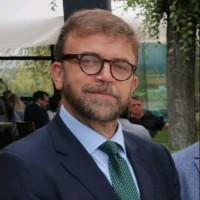






*Faculty and guest speakers are subject to change.
Employability
Boost your career with the support of ESIC’s Professional Development Unit (PDU)
The PDU supports you at every stage of your journey—both as a student and later as part of our Alumni community. The Employability area manages nearly 4,000 internship offers and over 2,000 job opportunities each year, with a global employability rate of 95%. It offers access to an exclusive job portal, international job platforms, and organises recruitment activities, career fairs, and employability training.
👉 Remember: your professional success will also depend on your initiative in identifying opportunities and your engagement throughout the process.
Learn more about ESIC’s Employability, Entrepreneurship Services and Alumni here.
97%
of our students are employed within the first year after completing the programme
+2.000
students receive career guidance each year from our Professional Development Unit
+3.200
partner companies collaborate annually in talent recruitment
+4.000
internship opportunities are managed annually by the Unit across our campuses
+1.800
job opportunities are available each year through our employability porta
CAREER OPPORTUNITIES
The basic graduate profile of the Master’s degree in International Relations and Global Economy is a highly trained professional who is well prepared to perform effectively in a globalised and constantly changing environment. The several specific profiles focus on areas of knowledge and competencies that are essential to seizing the challenges and opportunities facing the world of today.
- Specialist in International Relations
- Global economist
- Foreign Policy Analyst
- International Trade Specialist
- Diplomat
- Political advisor
- Development consultant
- Market research analyst
- Project Manager
- International Business Consultant
International Experience
📅 Duration: 1 week · 25 academic hours · 3 ECTS
The MIRGE integrates two full international immersion weeks directly into the curriculum — both included in the tuition fee and supported by Erasmus+ mobility grants for all students. These are not optional extras or weekend trips. They are the intellectual and professional centrepiece of the MIRGE experience: two weeks inside the institutions and ecosystems that define the global order the programme studies all year.
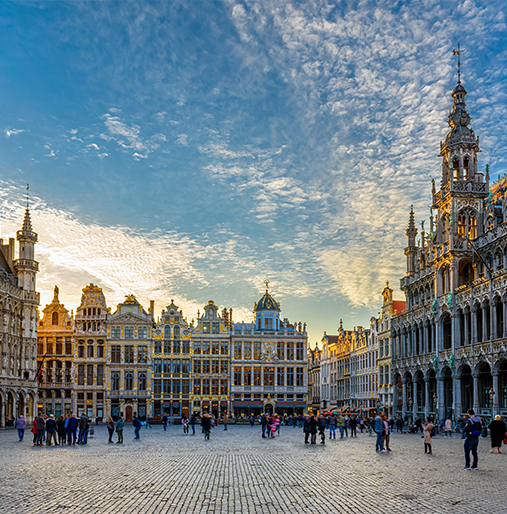
EU EXPERIENCE: BRUSSELS AND STRASBOURG
Objective: Place students at the heart of European institutional power and experience first-hand how the EU shapes global trade, regulation and governance.
Content:
- Academic visits and briefings at the European Parliament, European Commission and Council of the EU.
- Seminars with MEPs, Commission officials, Cabinet advisers and Permanent Representation diplomats.
- Workshops with Brussels-based think-tanks (Bruegel, CEPS, EPC) and European business federations.
- Structured visit to the European External Action Service (EEAS) and briefing on EU foreign and trade policy.
- Multilateral negotiation simulation in the European Parliament chamber.
Learning outcomes: Understand EU governance mechanisms from the inside · Analyse the EU's role as a regulatory superpower in global trade and geopolitics · Develop practical knowledge of how to engage with EU institutions as a professional · Build a network in the Brussels policy community.
What’s included?
- On-campus classes with professors and industry experts
- Case studies on global economics, AI, and financial policy
- Visits to international financial institutions
- Cultural experiences at key U.S. landmarks
- Certificate of completion from Georgetown University
What’s not included?
- Accommodation
- Flights
- Meals
Questions? Contact us: oficina.internacional@esic.edu

ASIA EXPERIENCE: CHINA IMMERSION WEEK
Objective: Experience the economic power, institutional dynamics and strategic ambitions of China from an analytical and professional vantage point.
Suggested locations: Beijing, Shanghai or Chengdu (confirmed annually).
Content:
- Seminars at leading Chinese universities and research institutes on Chinese foreign policy, Belt & Road Initiative and China's global institutional strategy.
- Workshops on geoeconomics, US-China rivalry and the implications for European and Latin American businesses and governments.
- Meetings with European and Chinese chambers of commerce, bilateral business councils and diplomatic missions.
- Visits to innovation hubs and discussions on China's technology and digital economy strategy.
- Cultural immersion and professional networking.
Learning outcomes: Analyse China's institutional strategy and its impact on the global order · Evaluate implications of US-China rivalry for European policy and business · Develop cultural intelligence and professional networks in Asia · Understand China's role as a rule-shaper in global governance.
What’s included?
- Face-to-face classes with ESG and sustainability experts
- Case studies on governance and sustainability
- Strategies for internal and external ESG communication
- Visits to leading companies in the sector
- Certificate of completion from EM Normandie
What’s not included?
- Accommodation
- Flights
- Meals
Questions? Contact us: oficina.internacional@esic.edu
Extension programme
📅 Duration: 3 to 12 months (minimum 12 credits)
Broaden your academic and professional horizons with the Extension Programme — a unique opportunity for international specialisation.
Designed to complement your studies, this programme allows you to choose subjects and courses from an exclusive portfolio of over 60 partner universities across Europe, Asia, and the Americas.
You’ll be able to customise your learning experience with courses aligned to your career goals and gain key knowledge for your professional future. Upon completion, you'll receive an official certificate listing your subjects and accredited credits, validating your global experience — with no academic cost, as ESIC covers it through bilateral agreements.
Take your education to the next level and stand out in a world without borders!
What’s included?
- On-campus university classes
- Assessment and academic monitoring
- Certificate of completion, transcript, and credit accreditation
What’s not included?
- Flights
- Accommodation
- Meals
Questions? Get in touch with us: oficina.internacional@esic.edu
If you want to see all the universities with detailed information, here it is.
DOWNLOAD EXTENSION PROGRAMMECAMPUS, PRICES AND FORMATS
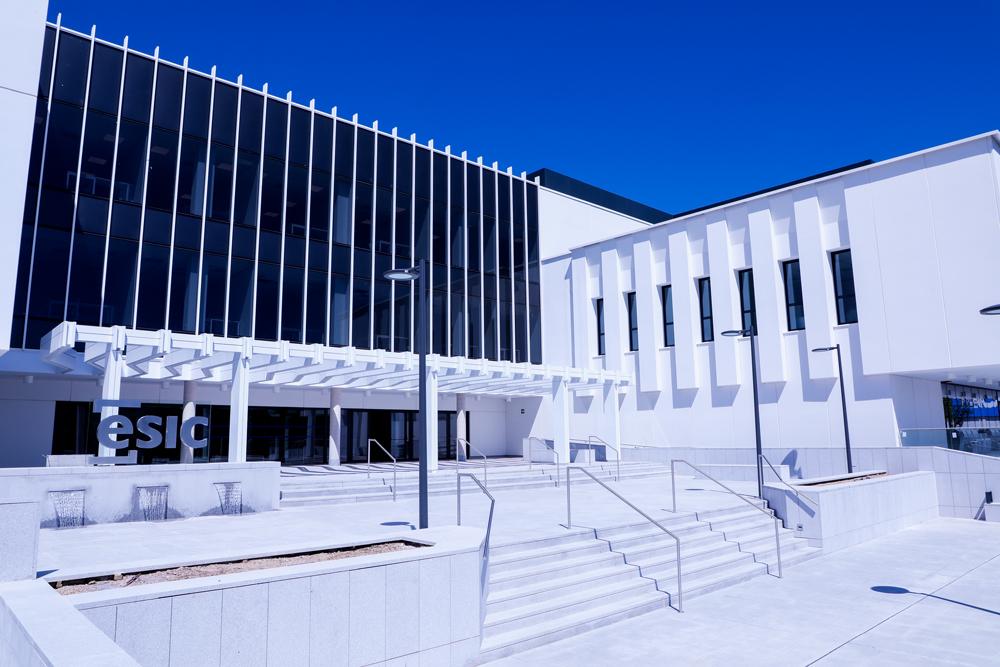
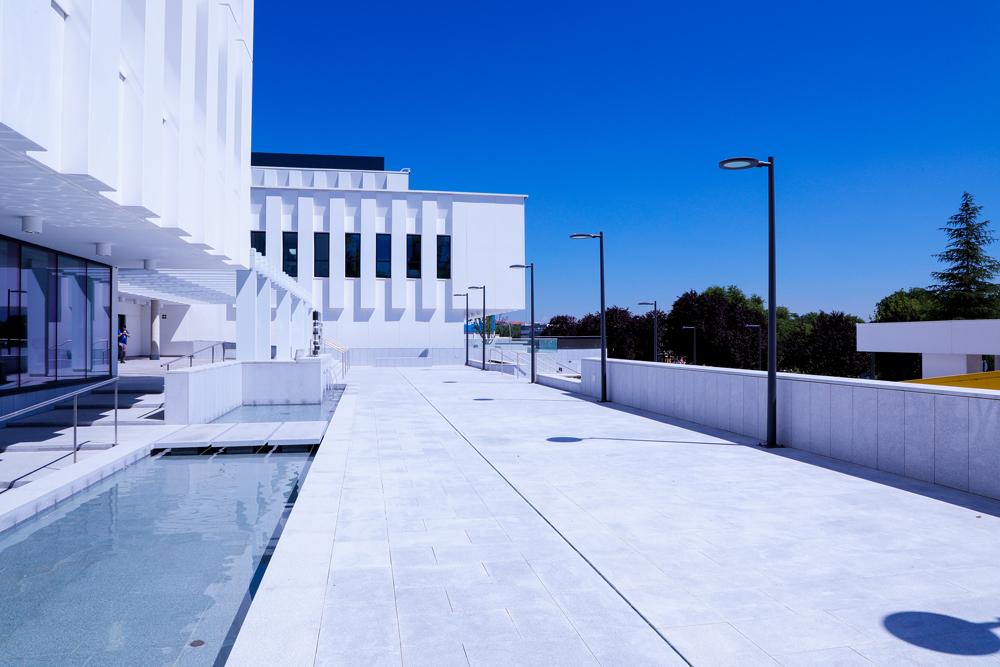
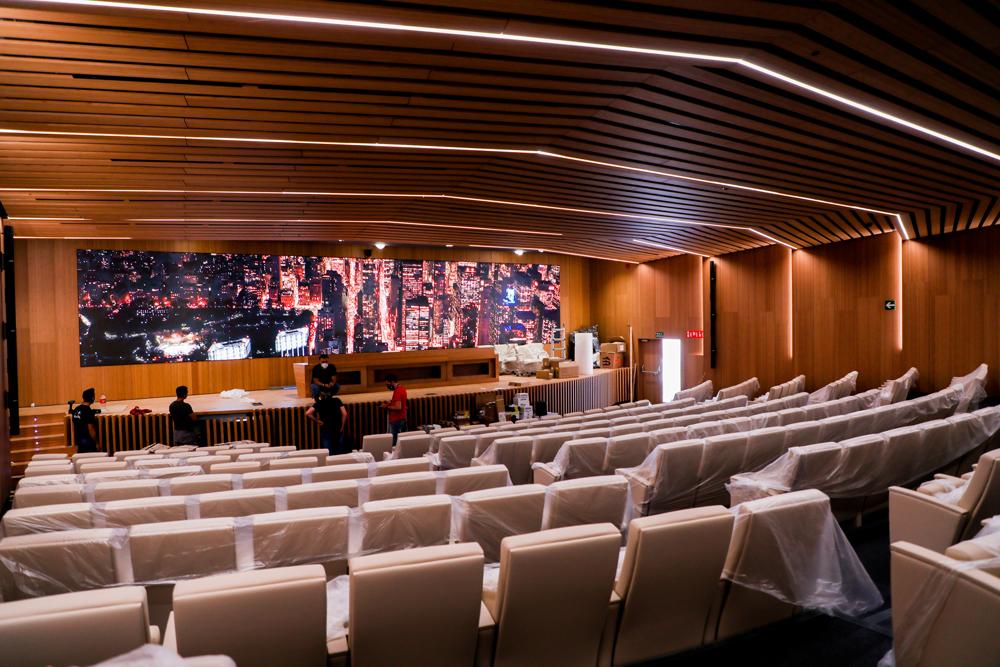
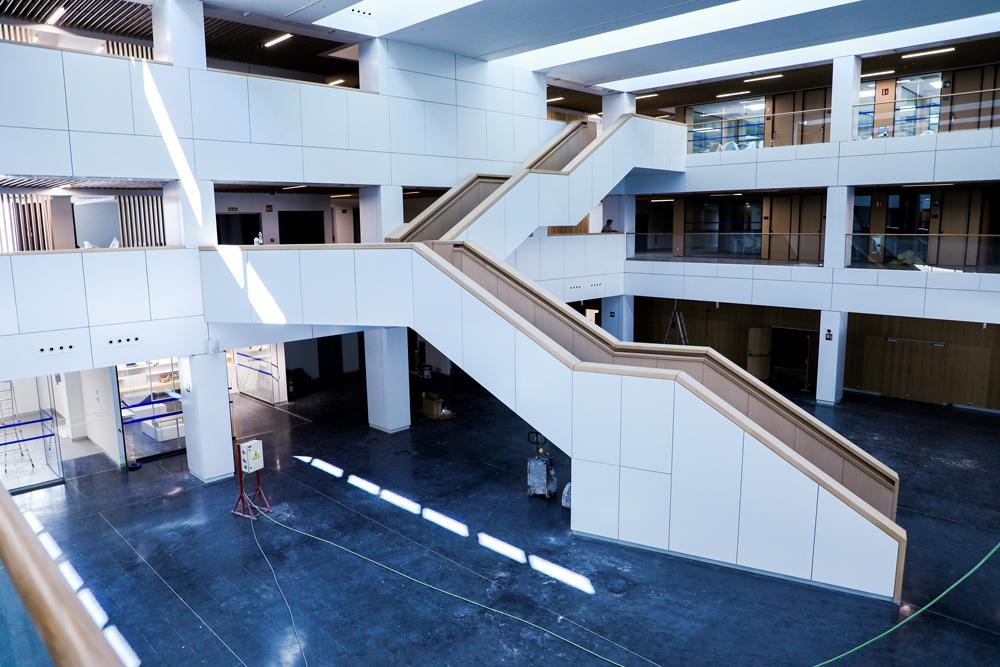
Our Master’s Degree in International Relations and Global Economy in Madrid is taught at ESIC Business & Marketing School campus. Our campus in Madrid was inaugurated in 2021 and has 36 classrooms, an auditorium for 300 people, 16 work rooms, 5 meeting points, gym, mindfulness room, cafeteria and much more. Our classrooms are full of students from our master's and postgraduate programmes specializing in marketing, management, and technology. The campus is the place to network, work on your ideas and learn. But, above all, it is the perfect place to live the present and build the future.
Campus in Madrid
Avenida Juan XXIII 12,
Pozuelo de Alarcón, Madrid
Phone +34 91 452 41 00
View on Google MapsIntakes and prices
Duration: 10 months
Tuition Fee:
To be confirmed
Intake: Full Time
ADMISSION PROCESS
We accompany you throughout the whole process, guiding and advising you so that you choose the best option for your professional career. These are the steps to follow:
1 Application
- You request information through our form.
- An advisor will contact you in the following 24–48 hours.
- You have a first contact call, and a consultancy meeting is convened for questions and doubts.
- You have a second call where all your doubts are solved, and you are guided in everything you need.
2 Documentation
- If the programme meets your needs, you proceed to apply.
- Prepare the necessary documentation (such as university degree or certificates).
- Conduct a personal and professional essay.
- You hand in all documentation.
3 Interview
- Once the documentation is approved, you are scheduled for an interview with the programme director.
- At this interview, you will be able to discuss any specifics you want to know about the programme, as well as any questions you may have.
4 Enrolment
- After the interview, your advisor will contact you within 24–48 hours to notify you if you have been accepted into the programme.
- Once you have been accepted, you have about 5 days to formalise your enrolment.
- Once the enrolment is complete, you will be given all your access (virtual classroom, e-mail…).
- Of course, our last step is always to congratulate you and to wish you the best in your studies.
SCHOLARSHIPS AND STUDY GRANTS
We currently offer a range of scholarships and financing agreements to help support your future.
We do not want economic issues to be an obstacle for you to reach your objectives and ensure training with a future. Therefore, we present you with a wide range of possibilities that will help you in this sense, both the Scholarship Plan that we have developed at ESIC, as well as those that are available to you from different public and private organisations. The scholarships and grants available are as follows:
- Early enrolment grants
- Diversity grants
- Expiga grants
- Women and Leadership grant
ESIC has financing agreements with certain banks with preferential conditions for students enrolled in any of its programmes, as long as you have a bank account in Spain. The specific rules and conditions of each of these agreements can be found in the Secretary's Office. ESIC helps you with the financing of your degree.
If you live outside one of the cities where ESIC has a campus and you are looking for accommodation, we recommend a series of companies and residences dedicated to student accommodation. Find the one that best suits your needs.
MORE INFORMATION
ESIC has partnered with Flywire to accept payments from international students worldwide. You can make your payment easily and securely in your own currency, using local payment methods from the safety and comfort of your home. Real-time tracking and multilingual support are available around the clock.
LEARN MORE ABOUT FLYWAREINTERNSHIP AND COLLABORATING COMPANIES
In the master's degree program, you will be in constant contact with working professionals from pioneering companies, either through workshops or interventions in the program. In addition, if you are looking to complete your training with internships, ESIC offers the possibility of contacting top companies in the sector. Among them we highlight:
OTHER PROGRAMMES THAT MAY INTEREST YOU




FREQUENTLY ASKED QUESTIONS
Study grants will be communicated to you during the selection process. Our grants are adapted to each profile and to the date on which the enrolment is completed. In addition, you can find information about the scholarships we offer at ESIC as well as those provided by other public and private organisations.
Yes, there is a mandatory attendance percentage in the on‑campus Master’s programmes. However, you may have a small percentage of unjustified absences.
Yes. The MIRGE is a verified Official University Master's Degree under the Spanish university system, fully recognised across the European Higher Education Area (EHEA) at MECES Level 3. Verification is conducted by Madri+d on behalf of ANECA and the Spanish Ministry of Education.
The MIRGE and the MITB are complementary programmes that address two distinct dimensions of international careers. The MIRGE focuses on the macro international environment — geopolitics, institutions, economic diplomacy, global governance and country risk. It trains analysts, advisers and strategists who operate at the level of governments, international organisations and think tanks. The MITB focuses on the operational execution of international business — market entry, trade finance, logistics, compliance and digital trade. It trains managers and consultants who make companies work across borders. MIRGE = understanding why. MITB = executing how.
A minimum B2 level (CEFR) is required, certified by an official external certificate recognised under CRUE/ACLES criteria. No internal university tests are accepted. Candidates without a valid external certificate cannot be admitted.
The MIRGE welcomes students from any bachelor's background — political science, law, history, engineering, business. Depending on your academic profile, you may be required to complete one or both supplementary modules (CF-1 and CF-2, 3 ECTS each) in the two weeks prior to programme start. A placement test determines this individually.
Yes. Both international weeks (Brussels/Strasbourg and China) are fully integrated into the curriculum and included in the tuition fee. Erasmus+ mobility grants are available to all students, further reducing travel and accommodation costs.
MIRGE graduates work in international organisations (UN, WTO, IMF, EU institutions), think tanks, strategic consulting firms, country risk departments of financial institutions, corporate public affairs and government relations teams, diplomatic services, bilateral and multilateral development organisations, and international NGOs.
The Global Policy Lab is the MIRGE's capstone project — an applied policy analysis or institutional strategy document, not a traditional academic thesis. Students tackle a real geopolitical, institutional or global economic challenge and produce a professional-grade deliverable (country risk assessment, policy brief, corporate diplomacy strategy or multilateral negotiation analysis), defended before a panel that includes an external expert from the world of international organisations, think tanks or diplomacy.
No. The MIRGE is offered exclusively in full-time mode. There is no part-time option. This ensures the depth of analytical engagement, the quality of the international experience and the cohort dynamics that make the programme work.