
Master’s Degree in Business Administration (MBA)
- Format In-person
- START
- LANGUAGE English
- ECTS 60
Full Time
Madrid
Download brochureIntroduction to the Official MBA in English
Transform your professional future with an MBA in English that combines rigorous academic training, a global business mindset, and the leadership capabilities demanded by today’s competitive world.
ESIC University’s MBA empowers you to strengthen your strategic thinking, broaden your management expertise, and develop the soft skills required to excel in a constantly evolving environment shaped by innovation, sustainability, and digital acceleration.
The programme offers two types of international experiences: short-term (1-week Business Study Tours with AMBA‑accredited partners) and long-term placements through academic mobility or international internships lasting 2–12 months.
2026 INTAKE
Up to 30% study grant. Apply today!
Why ESIC?
At ESIC we know that doing is the best way of learning. Our programme design is based on pragmatic components like tools, workshops, real-world cases, and the deployment of licenses so that you can access the labour market with the best possible preparation. Our International Master in Business Administration approach stands out for its many advantages:
Official university degree with European recognition - Our MBA is a verified official master's degree under the Spanish university system (ANECA / Madri+d), carrying full academic recognition across Europe.
AMBA accredited — a distinction achieved by only 2% of business schools worldwide.
International mobility included within tuition fees, with placements in AMBA‑accredited institutions.
Curriculum in constant evolution, delivered by experienced faculty and supported by industry advisors.
Exclusive complementary activities, including masterclasses, company visits, entrepreneurial workshops, networking events, and business lunches with senior executives.
Rankings
#1
SPAIN
Leaders in Marketing Master’s Programs according to El mundo

#3
SPAIN
ESIC on the podium of the Best Business Schools for recent graduates and young professionals

#34
EUROPE
ESIC among the European Top Schools for studying marketing programs

#49
WORLDWIDE
Best Marketing School based on the opinion of alumni, students, and employers

ESIC ACCREDITATIONS
More than 55 years of history means that we have institutional agreements and collaborations that recognise our quality as a business school. These are our accreditations:
ASSOCIATION OF MBAS
The international impartial authority
on postgraduate business education
EFMD Programme Accreditation
The leading international system of quality assessment,
improvement and accreditation of business programmes

Agencia Nacional de Evaluación de la Calidad y Acreditación
Sistemas de Garantía de Calidad de Centros y Docencia
ASSOCIATION OF MBAS
The international impartial authority
on postgraduate business education
EFMD Programme Accreditation
The leading international system of quality assessment,
improvement and accreditation of business programmes
Agencia Nacional de Evaluación de la Calidad y Acreditación
Sistemas de Garantía de Calidad de Centros y Docencia
Why should you study an MBA in English?
Our MBA prepares you to lead with purpose, drive organisational transformation, and create long‑lasting economic and social value. You will gain the strategic mindset, analytical capabilities, and leadership presence needed to guide teams and organisations in highly dynamic markets.
Skills Development
Build a powerful combination of hard and soft skills that will elevate your impact as a manager: Deep understanding of business functions, Insight into market dynamics and strategic interactions, Effective communication and problem‑solving.
Professional Growth
Whether you aim to accelerate your career, change direction, or build your own venture, this MBA provides the platform to realign your professional goals with the future you want to create.
Critical Thinking
You will sharpen your analytical judgment through curiosity, ethical reasoning, environmental awareness, and collaborative problem‑solving—empowering you to make responsible decisions in diverse and multicultural contexts.
STUDENTS’ PROFILE: WHO IS THIS MBA FOR?
This programme is ideal for young professionals with at least three years of experience who wish to progress from technical roles to management or executive positions.
It is also a strong fit for professionals seeking a shift toward the business world.
Entrepreneurial profiles—whether launching a start‑up or preparing to manage a family business succession—are especially valued. ESIC Entrepreneurs provides mentorship, incubation services, and expert support to accelerate your project.
Objectives Master’s Degree in Business Administration (MBA)
You will integrate and critically apply business frameworks to design forward‑looking strategies capable of addressing current and emerging challenges.
Learn to interpret market contexts at both domestic and international levels, enabling data‑driven strategic decisions.
Evaluate personal and team performance to identify areas for continuous improvement.
Implement human‑centred leadership with strong ethical standards.
Develop independence, initiative, and effective communication for complex professional settings.
PROGRAMME STRUCTURE AND LEARNING METHODOLOGY
Academic Plan
The master’s program combines updated courses with a Master’s Final Project (TFM), which you will develop throughout the entire program. Each subject addresses key topics with a practical approach: workshops, digital projects, and the application of tools and strategies in real-world environments.
TRASFORMATIVE LEARNING METHODOLOGY:
A student-centered model that enhances your personal and professional development through:
- Practical application of real business challenges
- Soft skills development
- Expert faculty guidance
- A diverse and international community
- Access to all ESIC resources
- It includes online materials, self-assessments, personalized tutoring, experiential activities, and a supervised final project — all designed to progressively put learning into practice.
- Main ethical theories applied to business.
- Ethical-economic paradigms.
- The company as a global and ethical citizen: tools.
- Managing social and environmental impacts.
- Decision-making and organization incorporating an ethical perspective.
- The economic and spatial nature of business: where we come from, where we are, and where we are going.
- Introduction to strategy. Strategic decisions. The strategic management process and its responsibility. Strategic management as a field of study.
- Strategic analysis. Business orientation and values. Environmental analysis. Internal analysis.
- Strategy formulation. Strategies and competitive advantages.
- Corporate Strategy (Horizontal Diversification. Vertical Integration, Mergers and Acquisitions, and Geographic Expansion). Social Responsibility and Sustainability.
- Strategy Implementation. Strategy evaluation and implementation.
- New Economic Models.
- Behavioral Economics.
- Management Information Systems.
- Financial Statements.
- Cash Flows
- Analysis and Diagnosis. Financial Ratios.
- Financial Cost Management.
- Risk Management and Growth
- The three dimensions: financial, environmental, and social.
- Management control, balanced scorecard, and financial KPIs.
- Fundamentals of financial mathematics.
- Capital markets and financing structure/sources.
- Investment project analysis.
- Company valuation.
- Definition and concepts of economics. Traditional economics.
- Economic markets. Types of markets, supply and demand. Microeconomics.
- Macroeconomic indicators. The importance of economic growth in society.
- Economic cycles and unemployment. The fourth industrial revolution. From the old economy to a new approach.
- Spanish and international economics. The future of the economy.
- Global Overview of Emerging Technology Trends.
- Artificial Intelligence and Advanced Automation.
- Cloud Computing and Edge Computing.
- Cybersecurity and Technological Risk.
- Advanced Connectivity Technologies (IoT, 5G, Software-Defined Networking).
- Blockchain, Web3, and Decentralized Digital Economy.
- Green Technologies (GreenTech) and Sustainable Innovation.
Based on an analysis of the market situation, competition, and consumers, identify opportunities that will enable the company to grow and differentiate itself from its competitors, always taking into account the needs of users and society in general.
- Relevant and professional sources of information (external and internal to the company, secondary sources, and fieldwork). New technologies and tools for data exploration and market and consumer analysis.
- Macroenvironment analysis (PESTEL).
- Competitive analysis and benchmarking tools (BCG, Porter, etc.) that enable the diagnosis of the situation of customers, competitors, collaborators, suppliers, context, and company. Critical success factors (CSF).
- Definition of the target audience and appropriate positioning.
- Strategic market segmentation according to different criteria (portfolio analysis, value-based segmentation).
- Targeting strategies (Ansoff product-market matrix).
- Value proposition and creation (Canvas).
- Creation of stimuli and attitudes; conceptualization of stimulus-organism-response mechanisms through informational or environmental signals (S-O-R model).
- New competitive strategies (cooperative marketing as a strategic alignment of companies with related businesses to combine marketing efforts; virtual level marketing; glocal and global marketing; etc.) in a changing environment, with a focus on digitization and sustainability.
- Based on the diagnosis, positioning, target audience, and competitive advantage, the objectives that will guide the operational implementation of the marketing plan are set.
- Product and service policy, from market research to the minimum viable product (MVP) proposal.
- Operational marketing planning through the traditional marketing mix (4Ps) and extensions to services, physical facilities, and process management (7Ps), among others.
- Relationship between consumers and the brand, customer segmentation, and loyalty programs.
- Customer management.
- Pricing methods and strategies (based on perceived value, demand, costs, competition) in a digital and global environment.
- Integrated marketing communication to convey the value proposition to the market.
- Commercial distribution structure and distribution channel strategies, retail & trade marketing.
- Commercial management, point-of-sale strategies, sales analysis and forecasting, sales plan.
- Budget and income statement preparation.
- Metrics and scorecard.
- Contingency plan.
- The internationalization of the company. What, why, and for what purpose should the company internationalize?
- The evaluation of the company's export capacity. Can the company undertake a process of internationalization?
- Pre-selection of foreign markets. Where and when should I market my portfolio of products and/or services?
- Analysis of target export markets. Why, which, and how should I establish myself in the target export markets?
- Establishment in target export markets. How should I market my portfolio of products and/or services in the markets where I am going to establish myself?
The course aims to bring supply chain management operational processes closer to company management positions, as this is a key issue that affects all areas of the organization. The importance of measuring and controlling operational processes using the corresponding indicators will be explained and explored in depth, and different quantitative methods will be used.
- Introduction to Operations, Supply Chain, and value chain models.
- Technology and innovation in Operations.
- Challenges in supply chain management.
- Control in the supply chain. Balanced scorecard.
- E-commerce.
- Introduction to Data Analytics in Business.
- Internal and External Data Sources.
- Data Integration, Processing, and Governance.
- Technological Tools and Platforms for Analytics.
- Conscious Leadership: leading without relying on autopilot.
- Emotional Intelligence: empathy as the key to leading and managing teams.
- Management styles and types of organization: how can I adapt my management style to the level of development of my employees?
- Resilience and energy: leading requires positive energy to manage change and adversity.
- People and team development: the role of the leader as a coach for their team.
- Persuasive communication.
- Communication content (from storytelling to brand content).
- Social influence.
- High-impact presentations.
- Conflict management.
- Crises and difficult situations.
- People Strategy and Employee Experience. Indicators (KPIs/OKRs).
Innovation models.
- Design Thinking.
- Lean Start Up.
- Agile.
- Etc.
Risks and failures in implementing innovation.
- Organizational barriers.
- Cultural barriers.
- People.
- Etc.
Assessment and selection of innovation methodologies.
Practical application of innovation methodologies.
The discipline of entrepreneurship.
The structure of a business plan. The path to success.
New strategic models for business creation.
Agile tools for the development and management of a business project.
Exponential disruption. Competitive macro trends and main implications for companies.
Importance of innovation in the business model and potential barriers to the development and implementation of innovation in business models.
Design of innovative business models:
- Business model navigator (O. Gassman).
- Business Model Canvas (Osterwalder and Pigneur).
- The Long Tail.
The Master's Thesis will consist of developing and defending a business creation plan or Business Plan. The plan will provide an overview of the business, as well as a detailed analysis of each of its functional areas, which may include:
- Project identification. Context analysis and competitive advantage / Identification of innovation levers. Strategic plan.
- Definition of value and value delivery process (operations) / Human resources structure.
- Investment plan.
- Strategic and operational marketing plan.
- Sales plan.
- Economic and financial viability of the project.
- Relevant ethical and sustainability aspects.
The project will be developed individually and defended before a panel.
The tutor will be a professor from the degree program, preferably a doctor and full-time faculty member. The panel will be composed of two professors from the degree program, preferably the Director of the Master's program and a professor from the degree program.
The Master's Thesis will be individual and the tutor will be assigned based on the area of knowledge most related to the professor.
The evaluation criteria for the Master's Thesis will be as follows (included in the corresponding course description):
- Formal characteristics: 20%
The writing style, adherence to the mandatory citation methodology, adherence to the minimum and maximum length requirements, compliance with the presentation guidelines (cover page, chapters, sections, headings, references, etc.) and binding, compliance with document layout guidelines (font, margins, line spacing, etc.).
- Material characteristics: 50%
Originality, problem statement, project objectives, and validity of conclusions reached, selected methodology, logic, structure, organization, and quality of documentary sources, as well as rigor of argument, coherence, and cohesion will be evaluated.
- Oral defense and presentation: 30%
Aspects such as clarity of presentation, ability to synthesize and adhere to time limits for speaking, as well as the ability to respond to questions from the panel and the coherence of the arguments in the oral presentation will be assessed.
*Academic structure subject to change. Some business reality and networking sessions may be delivered via webinars outside of class hours.
Master’s degree from ESIC University
Upon successful completion of the programme, you will be awarded the Master’s Degree in Continuous Education in International MBA, issued by ESIC University*.
Find out more about what obtaining a degree from ESIC University entails.
CURRICULAR ACTIVITIES
Discover the Hands-On Side of This Master’s Programme
Introductory sessions in:
- Financial Accounting.
- Business Management Fundamentals.
You will face both individual and group assessments. Some subjects include joint evaluations using shared real-life cases, requiring integrated analysis and solutions across courses. You’ll complete six group assessments plus the Final Master Project.
Work on real business challenges in rotating teams to maximise learning from diverse profiles.
You will work with tools such as TWOM, SPSS, ChatGPT, Excel, and Power BI.
FACULTY AND GUEST SPEAKERS


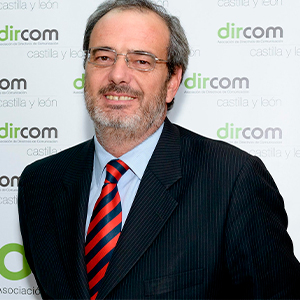













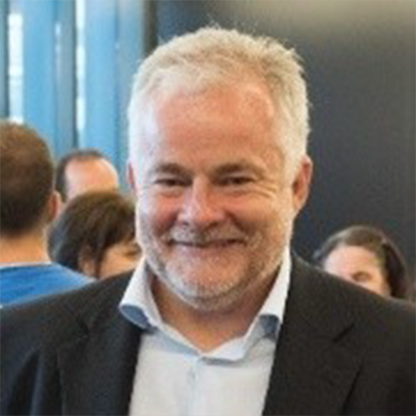


*Faculty and guest speakers are subject to change.
Employability
Boost your career with the support of ESIC’s Professional Development Unit (PDU)
The PDU supports you at every stage of your journey—both as a student and later as part of our Alumni community. The Employability area manages nearly 4,000 internship offers and over 2,000 job opportunities each year, with a global employability rate of 95%. It offers access to an exclusive job portal, international job platforms, and organises recruitment activities, career fairs, and employability training.
👉 Remember: your professional success will also depend on your initiative in identifying opportunities and your engagement throughout the process.
Learn more about ESIC’s Employability, Entrepreneurship Services and Alumni here.
97.3%
of our IMBA students are employed within the first year after completing the programme
+3,200
partner companies collaborate annually in talent recruitment
+4,000
internship opportunities are managed annually by our Professional Development Unit across our campuses
+1,800
job opportunities are available each year through our employability porta
CAREER OPPORTUNITIES OF THE MBA
The programme prepares participants to assume leadership and management roles across a wide range of business areas. Graduates will be equipped to join executive teams, start their own ventures, lead succession processes in family businesses, or develop their careers in sectors such as consulting and banking, among others.
- Senior management roles
- Start‑up founder
- Family business leadership
- Consulting
- Banking and financial services
WHERE DO OUR STUDENTS WORK?





Non-Curricular International Experience
📅 Duration: 1 week (intensive programme)
You can take part in an optional international experience that complements your training with an immersion in the world of international business. Explore new cultures while gaining practical knowledge and building a global network. Transform your learning and open doors to unique personal and professional opportunities.

IMBA & SPECIALIZATION IN EBS, ESTONIA
EBS – Tallinn, Estonia- Digital Business in Europe’s Innovation Capital
At Estonian Business School (EBS), located in the heart of Tallinn, students explore how digitization is reshaping business, government, and sustainability practices across Europe and beyond. Estonia is globally recognized as a leader in digital governance and innovation—making it the ideal setting for this forward-thinking track.
Subjects:
- Fintech
- E-Governance
- E-Startup
- Green Economy Innovation
Program Highlights
Through interactive sessions led by digital economy experts, students gain advanced knowledge of how technology drives innovation in finance, public systems, entrepreneurship, and sustainable development. The curriculum combines theoretical insight with practical application, offering:
- A deep dive into Estonia’s world-renowned E-Governance systems and how digital public infrastructure enables business agility.
- Strategic perspectives on Fintech, including blockchain applications and digital finance models.
- Tools and techniques for launching E-Startups in highly agile, tech-centric markets.
- A focus on Green Economy Innovation, aligning business models with sustainability and ESG imperatives.
This track prepares students for leadership in digitally driven sectors and enhances their readiness to thrive in tech-forward roles across industries.
What’s included?
- Masterclasses & hands-on workshops with experts
- Case studies on AI, blockchain, and cybersecurity
- Company visits & networking with Estonia’s top innovators
- Certificate of completion from EBS
What’s not included?
- Flights & accommodation
- Meals & personal expenses
Do you have any doubts? Talk to us!: oficina.internacional@esic.edu

SISU – Shanghai, China- Business in the Asian Century
At Shanghai International Studies University (SISU), students dive into the strategic heart of Asia’s economic engine. This one-month program provides immersive exposure to Asian business models, innovation practices, and regional consumer dynamics, all within one of the world’s most fast-paced commercial environments.
Subjects:
- Entrepreneurship in Asian Markets
- Consumer Behaviour and Applied Neuroscience
- Fintech Accounting and Corporate Finance
- Smart Operations and Supply Chain Management
Program Highlights
The SISU track enables students to:
- Decode the complexities of entrepreneurship in Asian markets and identify scalable opportunities.
- Leverage neuroscience and consumer behavior insights to craft culturally adapted strategies.
- Understand the financial structures underpinning Asia’s Fintech expansion and corporate growth.
- Master smart operations and supply chain tactics critical to thriving in high-speed, globalized networks.
With input from regional experts and visits to leading Chinese companies, this experience builds cultural intelligence and business agility essential for operating across Asia.
What’s included?
- Expert-led lectures & interactive discussions
- Case studies on China’s evolving business landscape
- Practical exercises & hands-on market entry strategies
- Networking with business leaders & peers
- Certificate of completion from SISU
What’s not included?
- Flights & accommodation
- Meals & personal expenses
Do you have any doubts? Talk to us!: oficina.internacional@esic.edu
Extension programme
📅 Duration: 3 to 12 months (minimum 12 credits)
Broaden your academic and professional horizons with the Extension Programme — a unique opportunity for international specialisation.
Designed to complement your studies, this programme allows you to choose subjects and courses from an exclusive portfolio of over 60 partner universities across Europe, Asia, and the Americas.
You’ll be able to customise your learning experience with courses aligned to your career goals and gain key knowledge for your professional future. Upon completion, you'll receive an official certificate listing your subjects and accredited credits, validating your global experience — with no academic cost, as ESIC covers it through bilateral agreements.
Take your education to the next level and stand out in a world without borders!
What’s included?
- On-campus university classes
- Assessment and academic monitoring
- Certificate of completion, transcript, and credit accreditation
What’s not included?
- Flights
- Accommodation
- Meals
Questions? Get in touch with us: oficina.internacional@esic.edu
If you want to see all the universities with detailed information, here it is.
DOWNLOAD EXTENSION PROGRAMMECAMPUS, PRICES AND FORMATS
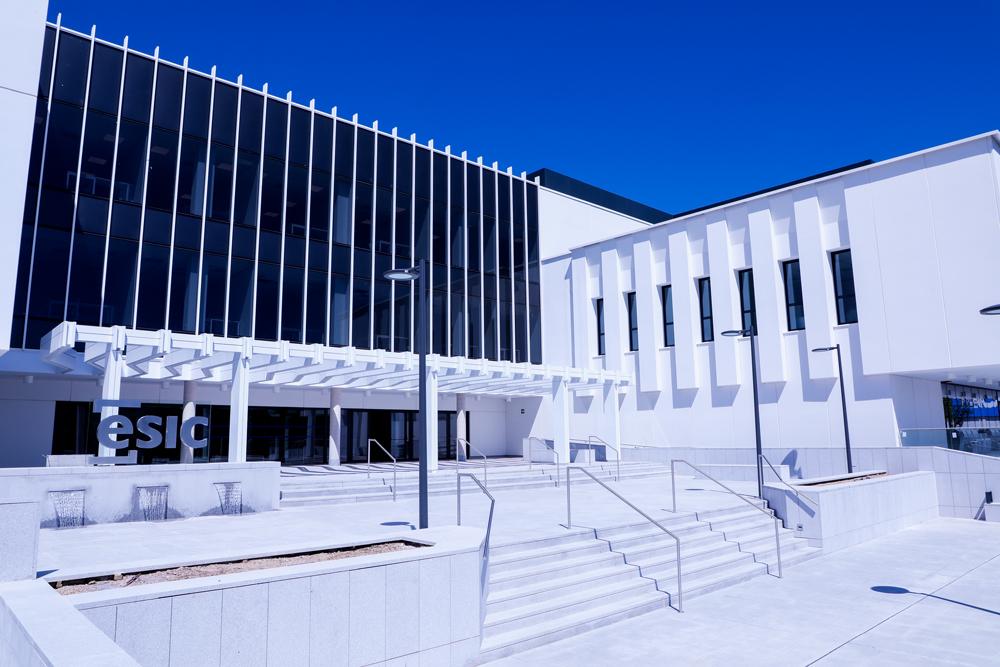
Campus in Madrid
Avenida Juan XXIII 12,
Pozuelo de Alarcón, Madrid
Phone +34 91 452 41 00
View on Google MapsIntakes and prices
Duration: Mondays to Thursdays 16:00 a 21:00h
Tuition Fee:
€ 24.600
Intake: Full Time
ADMISSION PROCESS
We accompany you throughout the whole process, guiding and advising you so that you choose the best option for your professional career. These are the steps to follow:
1 Application
- You request information through our form.
- An advisor will contact you in the following 24–48 hours.
- You have a first contact call, and a consultancy meeting is convened for questions and doubts.
- You have a second call where all your doubts are solved, and you are guided in everything you need.
2 Documentation
- If the programme meets your needs, you proceed to apply.
- Prepare the necessary documentation (such as university degree or certificates).
- Conduct a personal and professional essay.
- You hand in all documentation.
3 Interview
- Once the documentation is approved, you are scheduled for an interview with the programme director.
- At this interview, you will be able to discuss any specifics you want to know about the programme, as well as any questions you may have.
4 Enrolment
- After the interview, your advisor will contact you within 24–48 hours to notify you if you have been accepted into the programme.
- Once you have been accepted, you have about 5 days to formalise your enrolment.
- Once the enrolment is complete, you will be given all your access (virtual classroom, e-mail…).
- Of course, our last step is always to congratulate you and to wish you the best in your studies.
SCHOLARSHIPS AND STUDY GRANTS
We currently offer a range of scholarships and financing agreements to help support your future.
We do not want economic issues to be an obstacle for you to reach your objectives and ensure training with a future. Therefore, we present you with a wide range of possibilities that will help you in this sense, both the Scholarship Plan that we have developed at ESIC, as well as those that are available to you from different public and private organisations. The scholarships and grants available are as follows:
- Early enrolment grants
- Diversity grants
- Expiga grants
- Women and Leadership grant
ESIC has financing agreements with certain banks with preferential conditions for students enrolled in any of its programmes, as long as you have a bank account in Spain. The specific rules and conditions of each of these agreements can be found in the Secretary's Office. ESIC helps you with the financing of your degree.
If you live outside one of the cities where ESIC has a campus and you are looking for accommodation, we recommend a series of companies and residences dedicated to student accommodation. Find the one that best suits your needs.
MORE INFORMATION
ESIC has partnered with Flywire to accept payments from international students worldwide. You can make your payment easily and securely in your own currency, using local payment methods from the safety and comfort of your home. Real-time tracking and multilingual support are available around the clock.
LEARN MORE ABOUT FLYWARE






FREQUENTLY ASKED QUESTIONS
Study grants will be communicated to you during the selection process. Our grants are adapted to each profile and to the date on which the enrolment is completed. In addition, you can find information about the scholarships we offer at ESIC as well as those provided by other public and private organisations.
Yes, there is a mandatory attendance percentage in the on-campus Master’s programmes. However, you may have a small percentage of unjustified absences.
The MBA includes two types of international experiences designed to enhance your global perspective. Students can participate in short-term opportunities, such as one-week Business Study Tours delivered with AMBA-accredited partner institutions. In addition, the programme offers long-term international experiences through academic mobility placements or international internships lasting between 2 and 12 months.
International internships are available as part of the programme’s global experience offerings, but they are not specified as a mandatory component of the academic curriculum. Students have the opportunity to pursue internships abroad as part of their international pathway, depending on their interests and career goals.